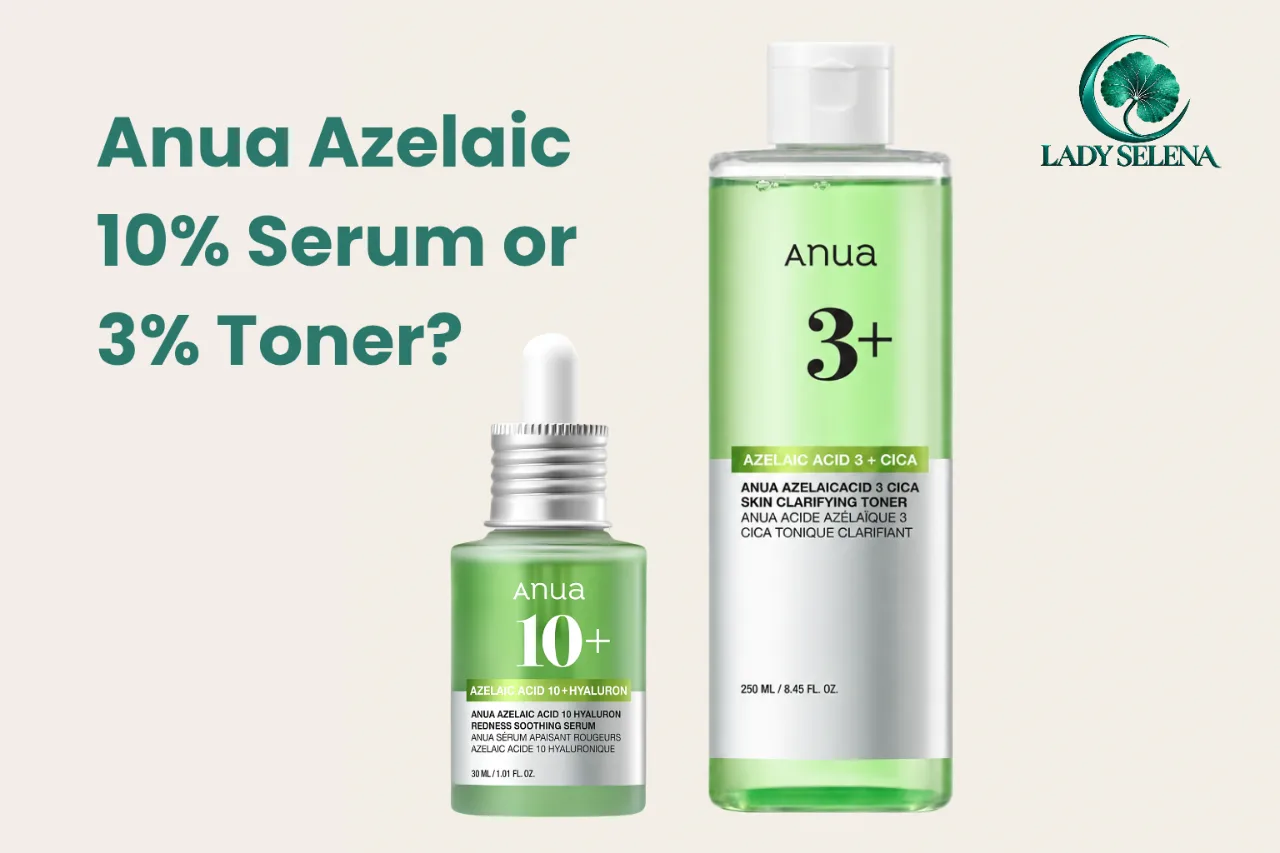
Comparison | Anua 10% Serum | Anua 3% Toner |
|---|---|---|
Post-acne brown marks | Our first choice of the two | Less targeted if pigmentation is the priority |
Recurring facial blemishes | Concentrated azelaic acid step | Supporting step for texture and congestion |
Visible redness | 10% azelaic acid + soothing ingredients | 3% azelaic acid + cica |
Pores and texture | Azelaic acid + betaine salicylate | Azelaic acid + salicylic/glycolic acids |
Back and body blemishes | Less practical for large areas | More practical format; not a proven back-acne treatment |
Azelaic acid | 10% | 3% |
Size and texture | 30 ml • lightweight serum | 250 ml • watery toner |
When to apply | Morning or evening | Morning or evening |
Price in Egypt | EGP 1,200 | EGP 1,349 |
LADY SELENA prices checked November 3, 2026; subject to change.
Quick answer: Which one should you choose?
Choose Anua Azelaic Acid 10% Serum when your primary concern is recurring facial blemishes, post-acne brown marks or uneven tone. It is the more concentrated azelaic-acid option of the two.
Choose Anua Azelaic Acid 3% Toner when you want a lightweight toning step for texture, oiliness and congested-looking pores, or a supplementary step for mild uneven body texture. For persistent, inflamed back acne, start with a dedicated evidence-based acne treatment rather than relying on this toner alone.
What does azelaic acid actually do?
Azelaic acid is a well-studied dermatological ingredient with three relevant actions:
Acne: It has anti-inflammatory and comedolytic properties that address processes involved in inflamed blemishes and clogged follicles.
Brown post-acne marks: It inhibits tyrosinase, an enzyme involved in melanin production, helping explain its role in post-inflammatory hyperpigmentation.
Redness: Its anti-inflammatory properties support its use in selected redness-related skin conditions, including rosacea; not every type of facial redness has the same cause.
The American Academy of Dermatology conditionally recommends topical azelaic acid among treatment options for acne. Read the clinical guideline.
Important distinction: Much of the medical evidence comes from specific 15% or 20% formulations. Evidence for azelaic acid as an ingredient is not proof that every cosmetic product containing it delivers the same results.
Is 10% better than 3% for acne and dark marks?
For post-acne brown marks on the face, the 10% serum is our first choice between these two Anua products. It is the more azelaic-focused formulation; the 3% toner combines lower-strength azelaic acid with additional texture-care ingredients.
A randomized, double-blind study published in 2024 enrolled 72 people with mild-to-moderate acne and compared a 15% azelaic acid gel with a vehicle gel over 12 weeks. The investigators reported better post-acne redness measures at weeks 8 and 12, and improvements in pigmentation measures relative to the comparison group at week 12. Read the study on PubMed.
These are findings for the studied 15% gel, not head-to-head evidence for Anua's 10% serum versus 3% toner. Our product recommendation is based on their declared concentration, ingredient lists and intended routine roles.
What makes Anua Azelaic Acid 10% Serum different?
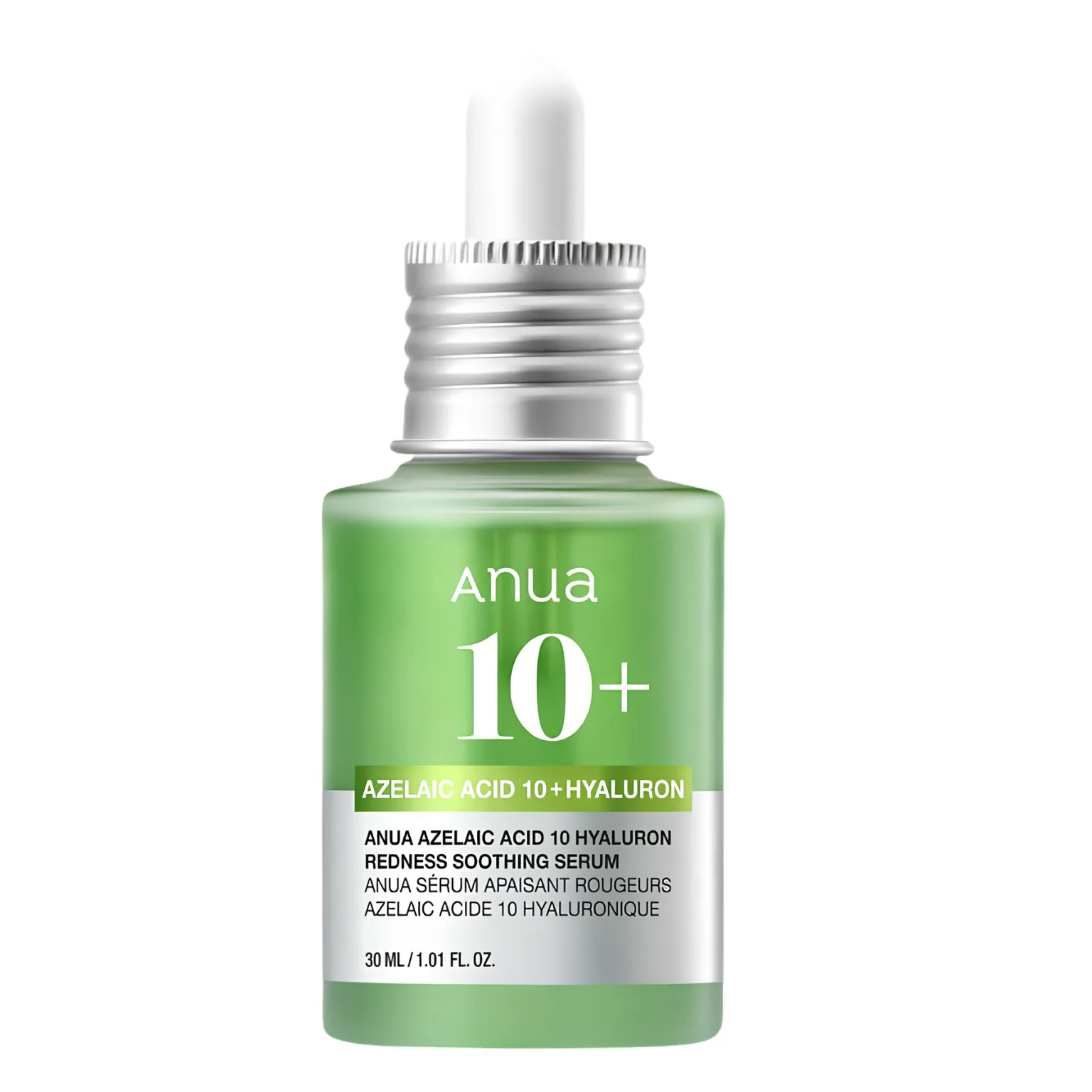
The full product name is Anua Azelaic Acid 10 Hyaluron Redness Soothing Serum. Alongside 10% azelaic acid, it contains ingredients selected for hydration and skin comfort:
Panthenol and hyaluronic acid: Hydration and barrier-comfort support.
Centella asiatica and its derivatives: Soothing skincare ingredients.
Niacinamide: Supports barrier function and is widely used in uneven-tone routines.
Betaine salicylate: A salicylate ingredient included in some pore-care formulas; the serum is not entirely free of ingredients associated with exfoliation.
Who should choose it? People with blemish-prone facial skin, especially when breakouts leave brown marks, and those who want a targeted azelaic-acid serum. Its lightweight texture may suit oily or combination skin.
Shop Anua Azelaic Acid 10% Serum at LADY SELENA.
What makes Anua Azelaic Acid 3% Toner different?
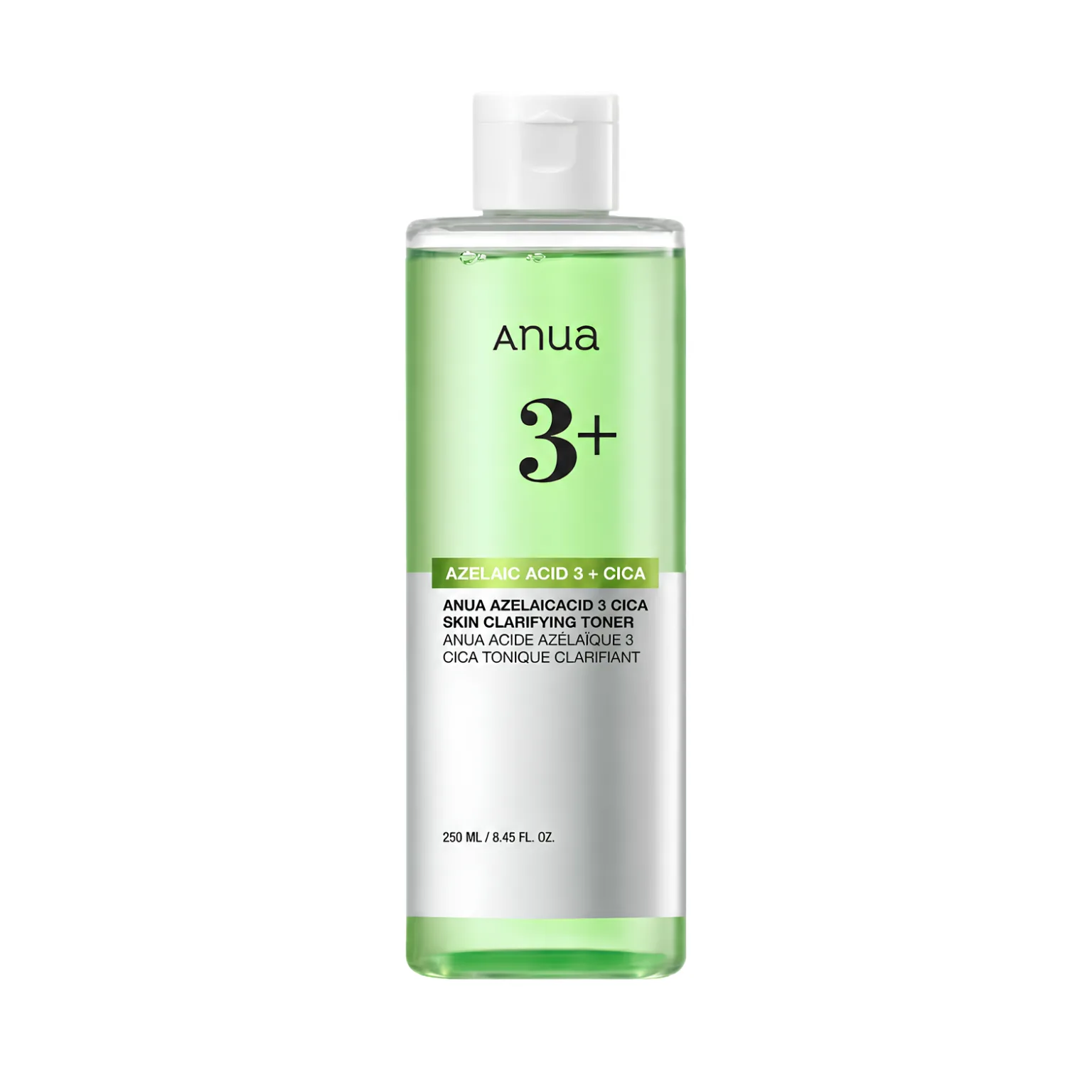
The full product name is Anua Azelaic 3 Cica Skin Clarifying Toner. It is a watery toner rather than a diluted version of the serum. In addition to 3% azelaic acid, its ingredient list includes:
Salicylic acid (BHA): Used in skincare for clogged pores.
Glycolic acid (AHA): An exfoliating ingredient used to refine surface texture.
Succinic acid and Zinc PCA: Found in some formulas for oily and blemish-prone skin.
Cica, panthenol and allantoin: Support skin comfort.
Anua discloses the 3% azelaic acid concentration but does not state the final percentages of its salicylic or glycolic acid. Their inclusion explains the formulation's purpose, not the exact strength of its exfoliating effect.
Is the toner automatically gentler because it is 3%?
No. It also contains rosemary leaf oil and tea tree leaf oil, which may irritate people sensitive to aromatic botanical oils. The serum's higher azelaic concentration can itself sting during introduction. If skin is actively inflamed or the barrier is compromised, address that before adding new active products.
Shop Anua Azelaic Acid 3% Toner at LADY SELENA.
Can the Anua 3% toner be used for back or body acne?
For mild surface blemishes and uneven body texture, it can be considered as a supplementary skincare step. For recurrent inflammatory back acne, it should not replace established acne treatment.
For genuine back acne
Back acne can involve whiteheads, blackheads and inflammatory papules. The American Academy of Dermatology's back-acne guidance supports a benzoyl peroxide wash for mild-to-moderate back acne, and adapalene 0.1% may improve results as part of an appropriate routine. It advises leaving benzoyl peroxide wash on the back for two to five minutes before rinsing, in accordance with product directions.
For mild congestion and uneven body texture
The 3% toner is easier to spread across larger areas because it is watery and comes in a 250 ml bottle rather than a 30 ml serum bottle. This is a practical format advantage, not a clinical claim. Anua's instructions describe facial use; no published trial establishes this specific toner as a stand-alone back-acne treatment.
If body bumps are small, uniform and itchy
Not every body bump is acne vulgaris. Folliculitis can resemble acne, while keratosis pilaris often creates rough bumps on upper arms and thighs. Persistent itching, widespread bumps or failure to improve are reasons to reassess the diagnosis rather than repeatedly exfoliate.
How to try the toner on the back
Gently cleanse the area after showering and let the skin dry.
Patch-test a small area of intact skin.
Apply a thin layer with clean hands or a suitable back applicator.
Start two or three times weekly, increasing only if your skin remains comfortable.
Moisturize if dryness develops and protect exposed skin from the sun.
Do not use it on broken skin or immediately after hair removal. Deep, painful or scarring back acne warrants a dermatologist's assessment.
Which product fits your main concern?
Recurring facial breakouts and brown marks: Choose the 10% serum as the more targeted Anua option.
Congested-looking pores and uneven texture: Choose the 3% toner as a light, multi-ingredient step. For stubborn blackheads, a dedicated salicylic-acid product with a disclosed concentration may have a clearer exfoliating purpose.
Recurrent inflamed back acne: Prioritize an evidence-backed treatment such as a suitable benzoyl peroxide wash; the toner is not its replacement.
Skin reactive to aromatic botanical oils: The toner is not our first choice because it contains rosemary and tea tree oils. The serum does not contain those oils, but it still needs gradual introduction.
How do you use each product?
Anua 10% serum routine
After gentle cleansing, apply one or two drops before moisturizer. Anua recommends starting once or twice a week and increasing gradually according to tolerance. It can be used in the morning or evening; apply SPF 30 or higher when using it in the daytime.
Anua 3% toner routine
After cleansing, smooth on a small amount with clean hands, avoiding the eyes, then apply moisturizer. Anua says it can be used morning and evening. If you are new to active acids, starting two or three times a week makes irritation easier to monitor.
Can you combine azelaic acid with niacinamide, retinoids and exfoliants?
Niacinamide: Yes; the 10% serum already contains it. Retinol or retinal: They can fit into the same overall routine, but beginners may prefer alternating nights to limit irritation. Additional AHA/BHA products: Avoid stacking multiple strong exfoliants when starting. Both Anua products together: It is not necessary; begin with the one that serves your main goal.
How long does azelaic acid take to work?
Acne: Some studied medicinal formulations can show noticeable improvement after about four weeks. Post-acne redness and marks: The 2024 15% azelaic acid trial found relevant changes over 8–12 weeks. Brown pigmentation: Changes usually require weeks to months, depending on the cause and whether new blemishes continue.
These are study-related timelines for specific formulations, not guaranteed deadlines for either Anua product. To judge progress, compare photographs taken every four weeks in similar lighting and keep track of new blemishes, marks and irritation.
What are the side effects? What about pregnancy and breastfeeding?
Common local reactions include temporary stinging, itching, dryness or redness. Mild transient tingling can occur, but persistent burning or significant swelling is not a sign of effectiveness. Stop use and seek professional advice if that happens.
Pregnancy: The American Academy of Dermatology considers topical azelaic acid generally thought to be safe during pregnancy, unlike retinoids. This refers to the ingredient; discuss each finished Anua formula with your clinician before use, particularly across large body areas. AAD pregnancy guidance.
Breastfeeding: LactMed considers topical azelaic acid low risk, while advising against application to the breast or nipple and against direct infant contact with treated areas. This assessment does not automatically extend to every additional ingredient in a cosmetic toner. LactMed reference.
Frequently asked questions
Can I use azelaic acid with niacinamide?
Yes. They can be used in the same routine if your skin tolerates the formula.
Morning or evening: which is better?
Either. Follow the product instructions and use sunscreen daily, especially when targeting pigmentation.
Is the 3% toner a substitute for back-acne wash?
No, not for recurrent inflammatory acne. A benzoyl peroxide wash has more direct supporting evidence for that concern.
Does azelaic acid remove pitted acne scars?
No. It addresses acne and some color changes, not the structural changes behind depressed scars.
Can I apply the toner immediately after hair removal?
Avoid applying it immediately afterward. Freshly treated skin is more susceptible to stinging and irritation.
How can you buy authentic Anua skincare in Egypt?
Check the full product name, size and packaging against Anua's official website, and choose a retailer with transparent authenticity and after-sales policies. LADY SELENA selects skincare from suppliers it considers reliable and reviews packaging and product details before listing items.
Read the LADY SELENA Authenticity Guarantee, our Korean skincare buying guide, and our guide to red versus brown post-acne marks.
Final verdict: 10% serum or 3% toner?
Choose the 10% serum for a targeted facial routine focused on recurring blemishes, brown post-acne marks and uneven tone. Choose the 3% toner for a light toning step addressing texture and congestion, or as supplementary body-texture care—not as a primary treatment for persistent back acne.
Explore Anua skincare at LADY SELENA and order online in Egypt with Cash on Delivery or InstaPay.
Scientific sources and product references
American Academy of Dermatology — Acne treatment guideline
2024 randomized clinical trial of 15% azelaic acid — PubMed
American Academy of Dermatology — Back acne
American Academy of Dermatology — Pregnancy guidance
LactMed — Azelaic acid during breastfeeding
*By LADY SELENA Editorial Team. Educational content; persistent or severe skin conditions require individual medical assessment.*